

Big ideas, real impact.
Innovation isn’t about following what’s been done before; it’s about finding what works and proving it. At Somewhat Engineering, we don't build to match standard playbooks. We test assumptions, adapt under pressure, and let empirical results define the final design.
-
We are a garage-based group taking on ambitious and unproven projects & builds.
-
We think beyond standard playbooks and strive to explore unproven approaches when they offer a better path forward.
-
Rapid iteration, first-principles design, and hands-on fabrication—turning high-risk concepts into working prototypes.
heavy lift drone
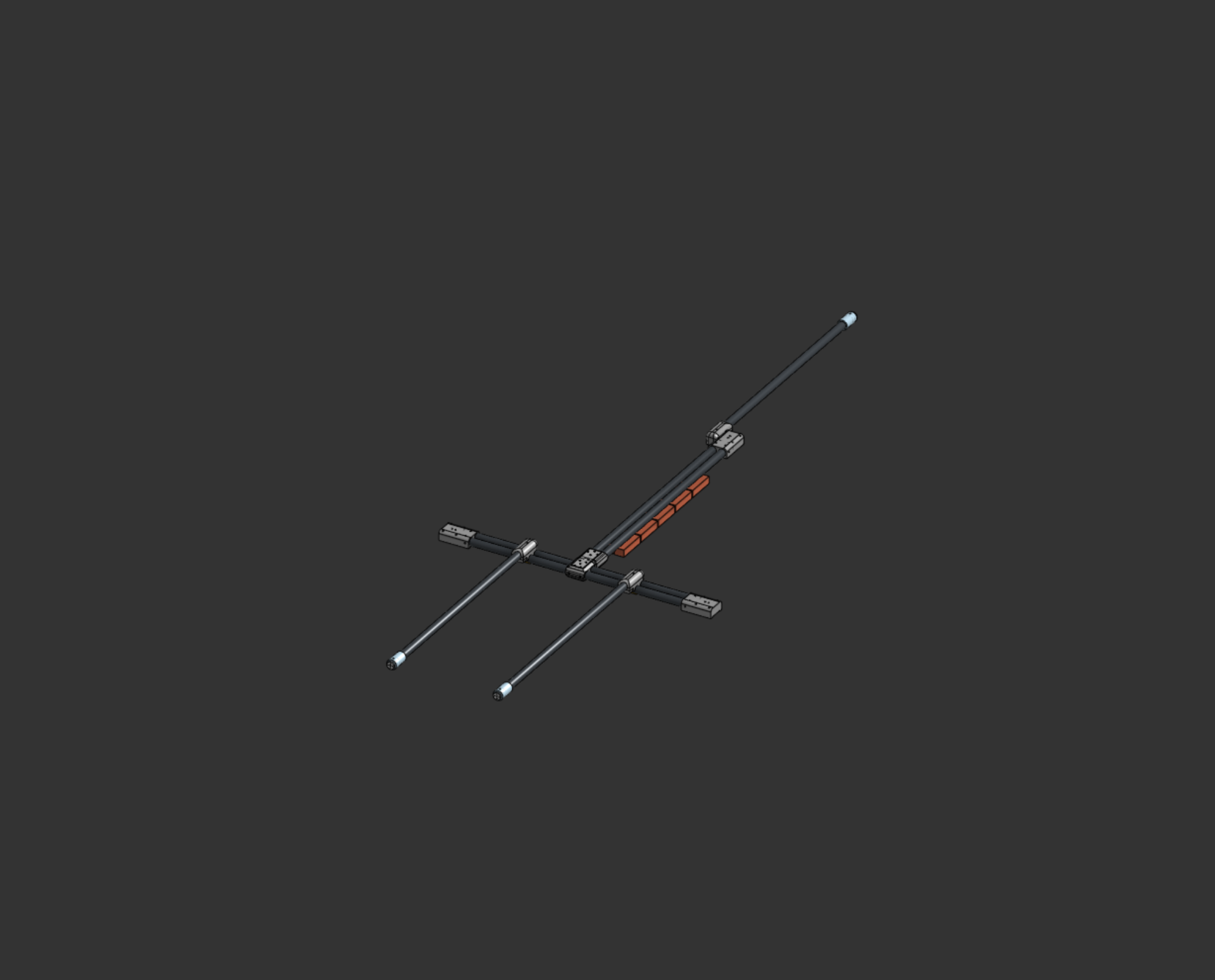
FRAME TYPE : Carbon Fiber H-Frame
POWER TRAIN : Gas-Electric Hybrid System
MAX GENERATED POWER : 13 kW @ Max RPM
WEIGHT : 38 lbs AUW
LIFT CAPACITY : 160 lbs
FLIGHT CONTROLLER : Pixhawk Cube Orange
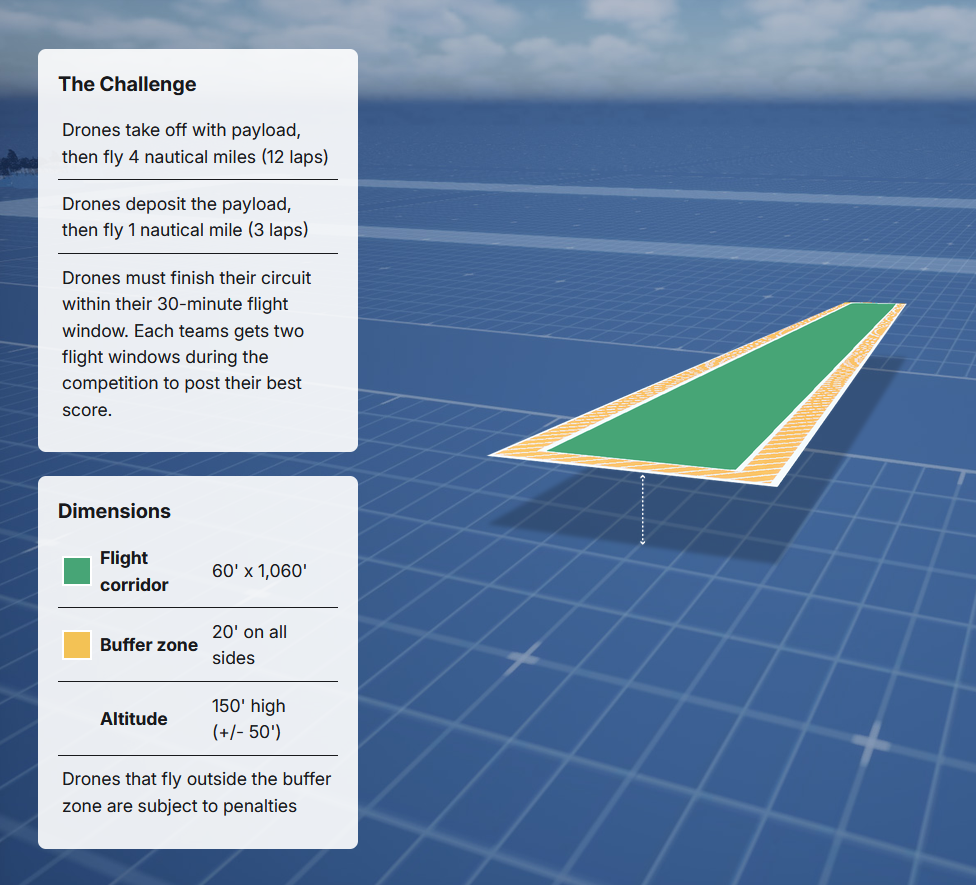
THE CHALLENGE
THE CHALLENGE
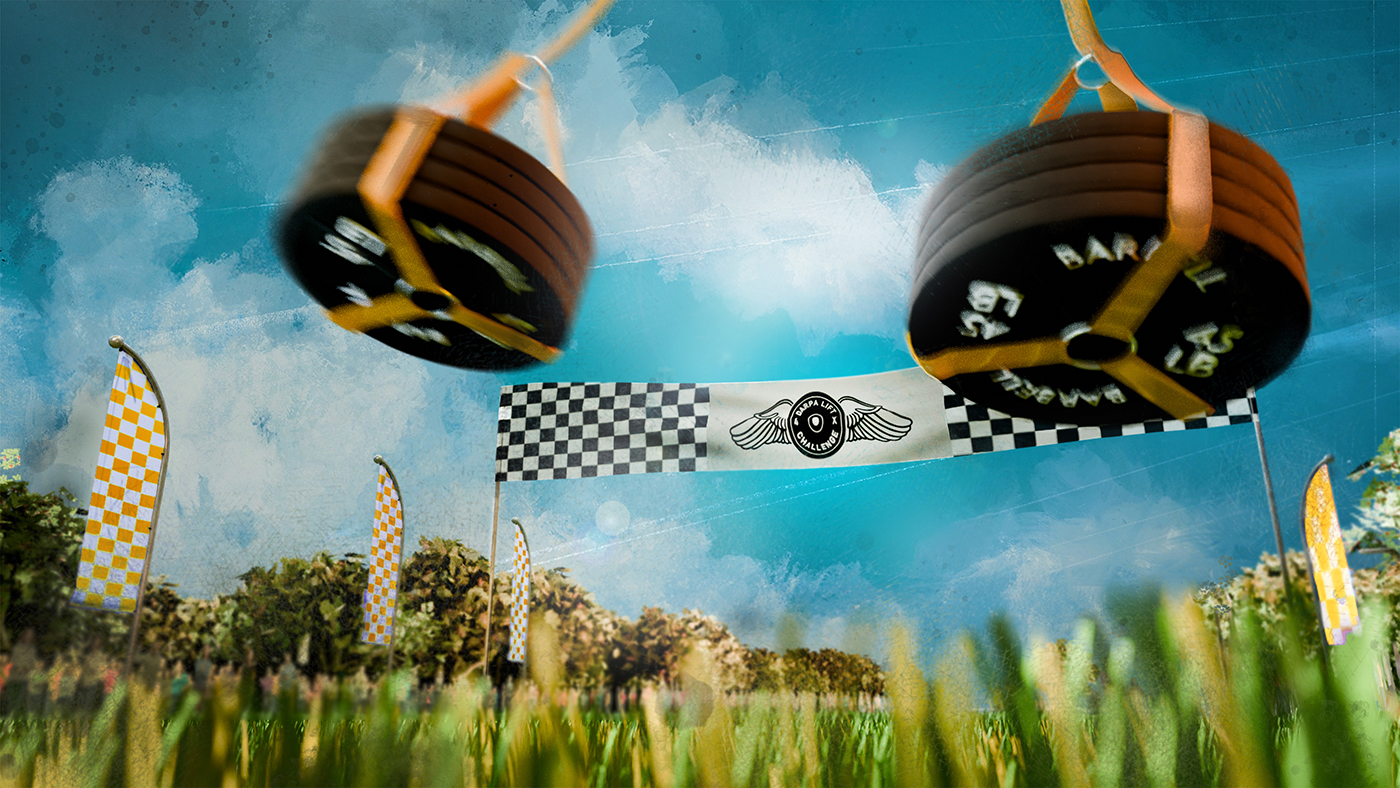
The DARPA Lift Challenge tasked teams with developing a small Unmanned Aircraft System (sUAS) capable of lifting heavy payloads under extreme operational constraints. While conventional multirotor drones are simple and reliable, they suffer from a severe heavy-lift bottleneck, typically maxing out at a payload-to-weight ratio of 1:1 or less.
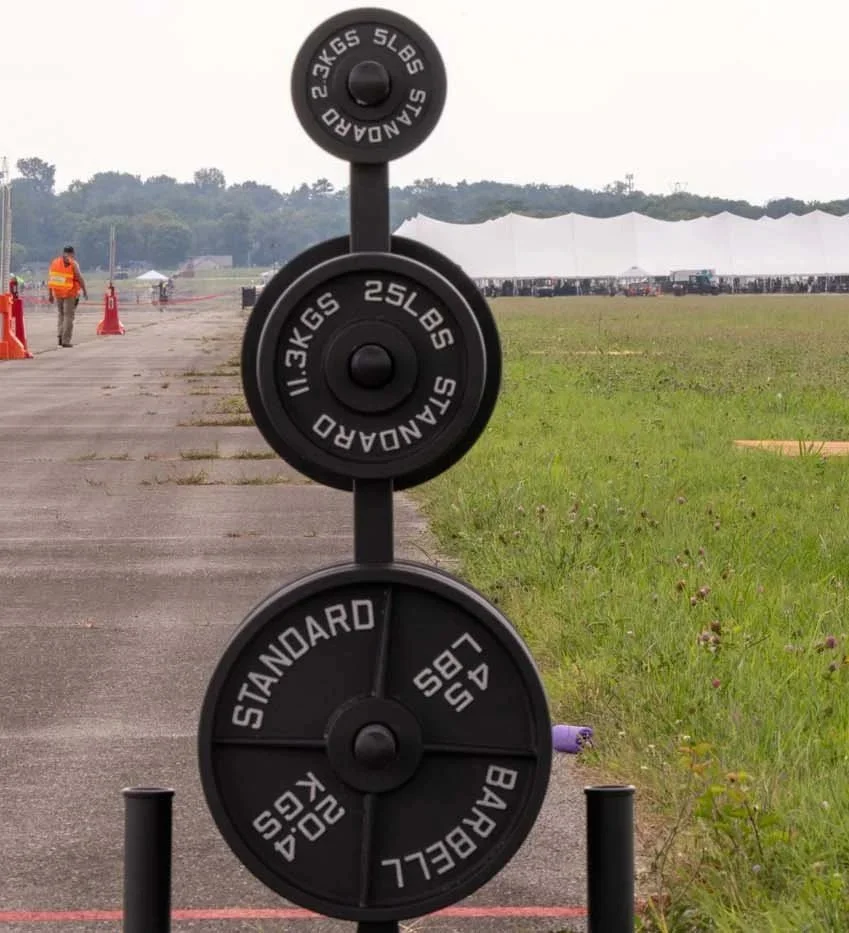
DARPA aimed to shatter this limitation by seeking novel aircraft designs capable of carrying more than four times their own weight, all while staying strictly under the FAA Part 107 maximum takeoff weight threshold of 55 lbs. Achieving a 4:1 payload-to-weight ratio within this strict envelope required abandoning conventional battery setups in favor of an entirely new power and control architecture.
IDEA & MOTIVATION
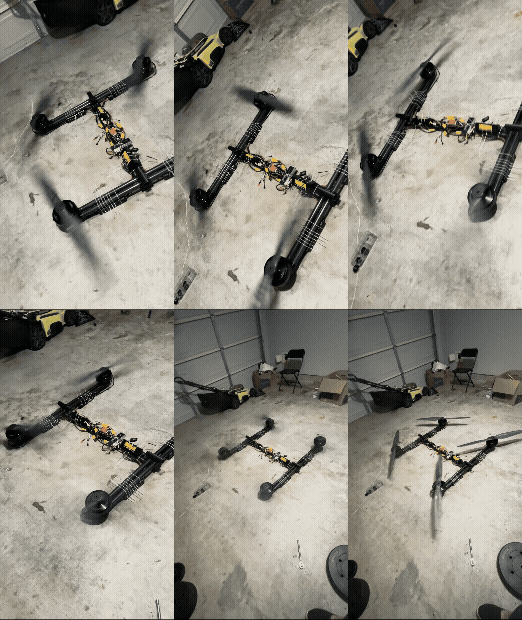
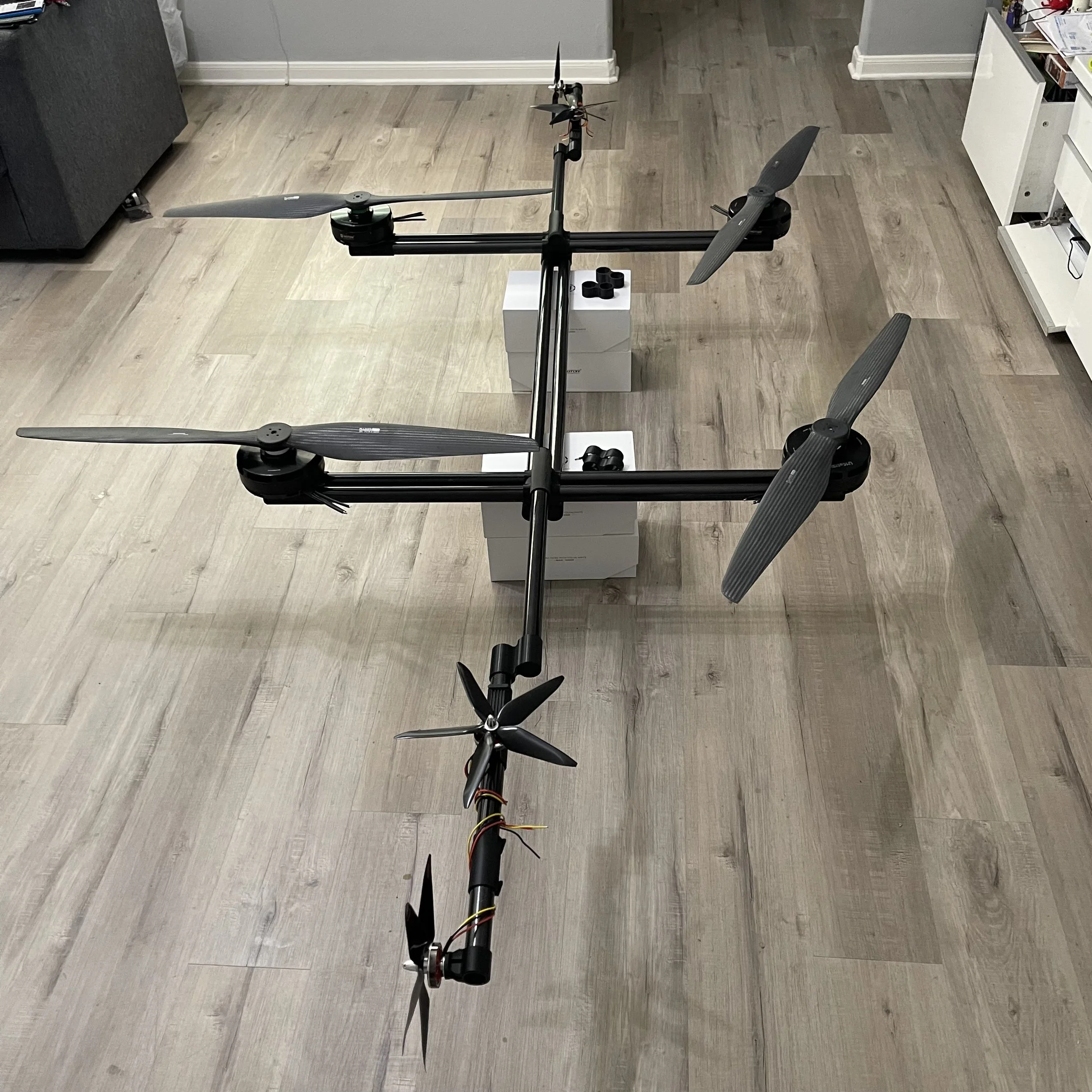
To answer DARPA's call, the goal was to design a high-payload sUAS capable of sustained flight times without sacrificing agility or remaining restricted by standard battery energy densities. Starting from an initial tandem concept, the design evolved into a robust quadcopter layout with an auxiliary control subsystem to maximize reliability, roll/pitch/yaw responsiveness, and lifting efficiency while maintaining a total weight under 55 pounds.
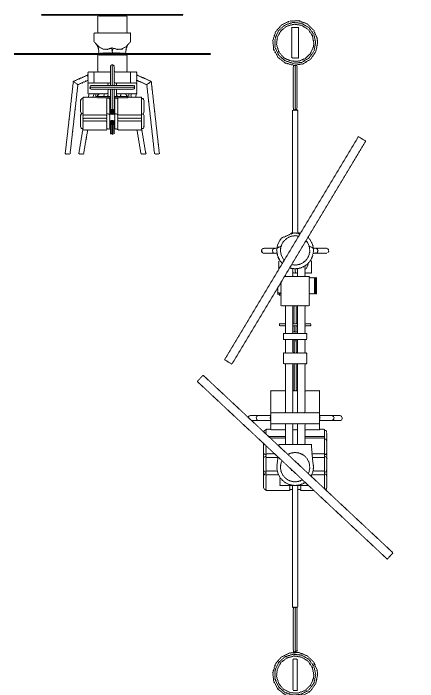
Initial tandem design
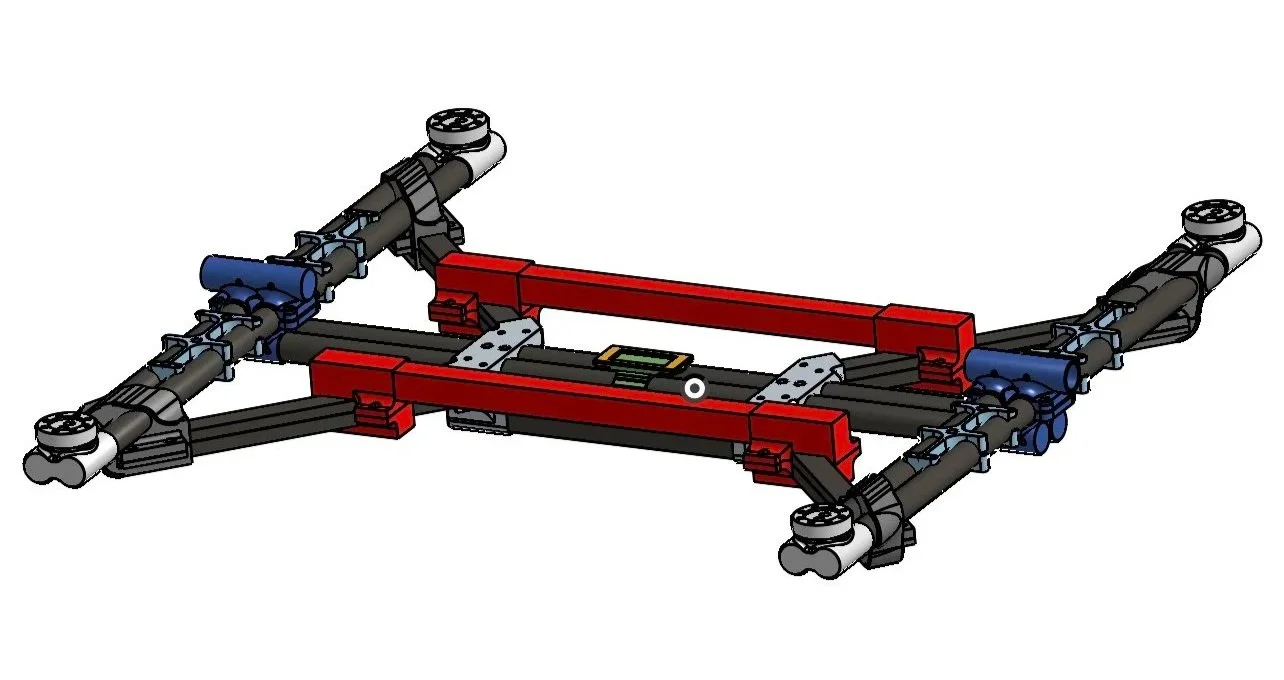
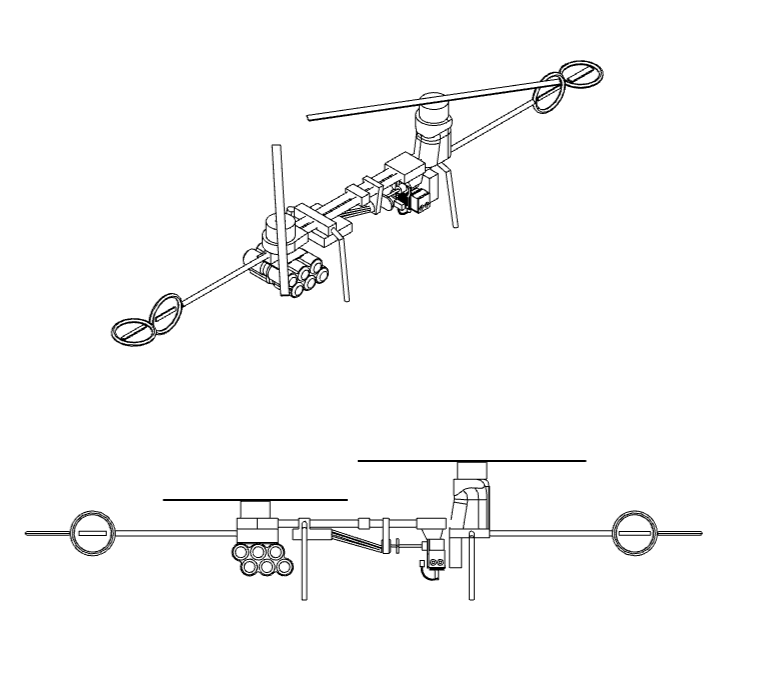
Quadcopter layout

PLAN & SYSTEM ARCHITECTURE
-
4 heavy-lift BLDC motors delivering 36 kg (79 lbs) of thrust per arm, driving 38" x 15" carbon fiber propellers (170g each, 2,800–5,200 RPM).
-
6 5010 BLDC motors running 10" x 9" 5-blade PC-CF propellers (40.5g each, 2,000–6,000 RPM) providing dynamic roll, pitch, and yaw stabilization.
-
Low-footprint carbon fiber H-frame designed to eliminate prop-wash drag over structural tubes.
LIFT & CONTROL SYSTEM
-
Twin 2-stroke aluminum engine (4.5 lbs, 6,000–8,700 RPM).
-
Drives an M30 BLDC motor outputting up to 13 kW of continuous electrical power.
-
Custom 3D-printed TPU dampening coupler (90g) connecting the engine and generator shafts to isolate aggressive engine vibration frequencies and withstand centrifugal stress.
POWER GENERATION
limitations & workarounds
Risk analysis identifying potential failure points during operation. Each failure point is evaluated by severity and likelihood, pairing critical engineering vulnerabilities with actionable hardware and software mitigations.
-
Severity: High | Likelihood: Low
Strategy: Controlled capacitor discharge at safe altitude to cushion emergency descent.
-
Severity: High | Likelihood: Medium
Strategy: Reinforced mount placement, stay wires, and internal cross-rod stabilization.
-
Severity: High | Likelihood: Low
Strategy: Redundant dual receiver/transmitter hardware protocols.
-
Severity: Catastrophic | Likelihood: High
Strategy: Enable direct main motor PWM overrides.
-
Severity: Catastrophic | Likelihood: Medium
Strategy: Lightweight aluminum rod, nut, and bolt structural reinforcement.
-
Severity: Catastrophic | Likelihood: Medium
Strategy: 3D printed structural parts engineered using high-temperature technical filaments.
-
Severity: Catastrophic | Likelihood: High
Strategy: Enable direct main motor PWM overrides.
-
Severity: Catastrophic | Likelihood: Medium
Strategy: Lightweight aluminum rod, nut, and bolt structural reinforcement.
-
Severity: Catastrophic | Likelihood: Medium
Strategy: 3D printed structural parts engineered to withstand high temperatures.
pre-competition conclusion
-
Severity: High | Likelihood: Low
Strategy: Controlled capacitor discharge at safe altitude to cushion emergency descent.
-
Severity: High | Likelihood: Medium
Strategy: Reinforced mount placement, stay wires, and cross-rod stabilization.
-
Severity: High | Likelihood: Low
Strategy: Redundant dual receiver/transmitter hardware protocols.
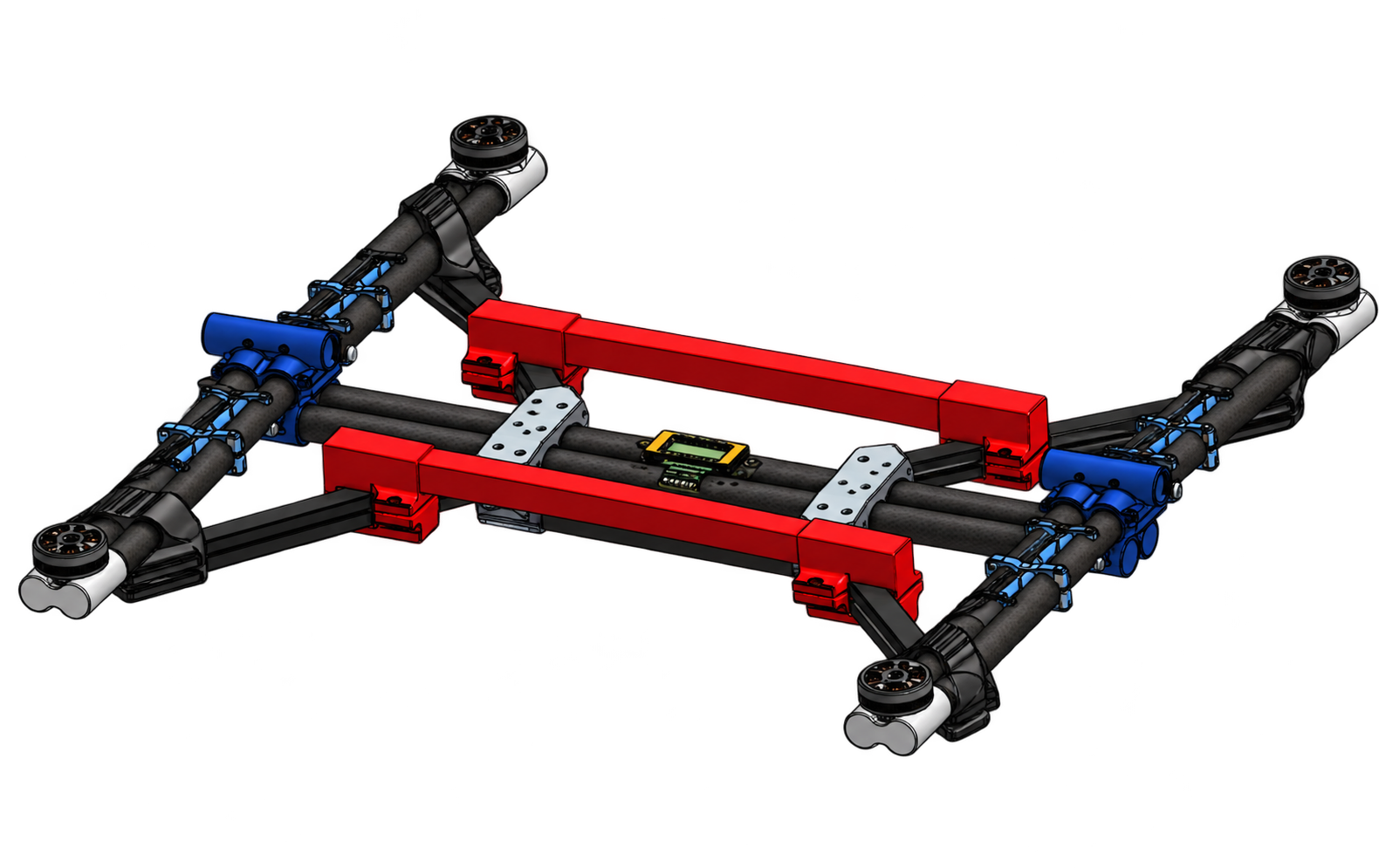
The shift to a quad-copter base layout with 6 auxiliary control motors unlocked full 3-axis flight stability (roll, pitch, and yaw) while drastically reducing mechanical complexity. The dampening TPU coupler proved essential in absorbing engine harmonic vibrations before reaching the M30 motor. The system generates 13 kW of onboard power and yields an additional 160 lbs of lifting capability while remaining within sUAS weight compliance guidelines.
reality
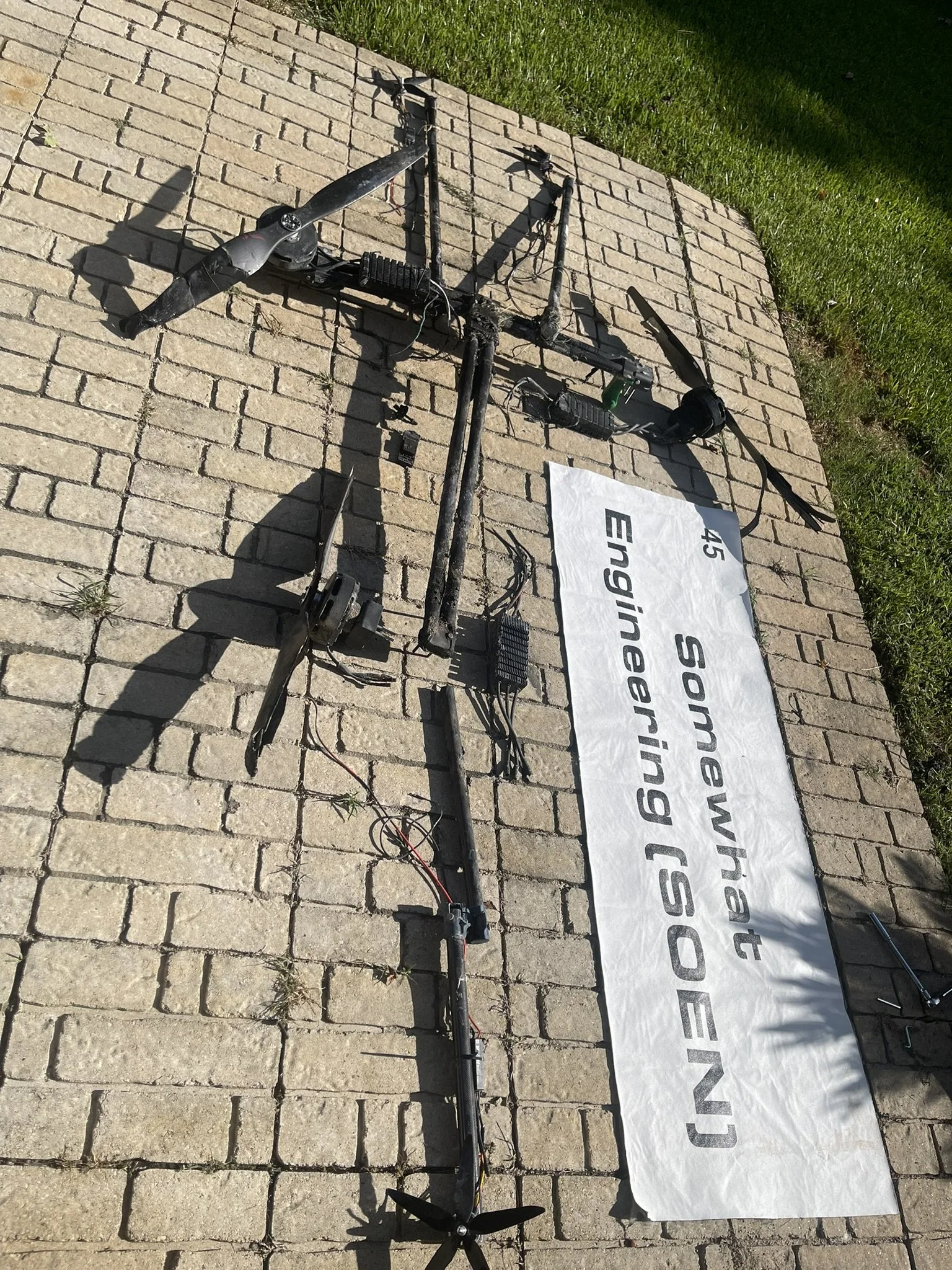
Upon arriving in Dayton, Ohio, from Houston, Texas, during competition week, we discovered that one of the main motor ESCs was not functioning properly. Faced with limited resources, we spent three days troubleshooting and reconfiguring our craft's layout, adapting our design from a quadcopter to a tricopter.
Because we lacked a servo to tilt the tail motor for yaw control, we repurposed components from our auxiliary control system. We implemented a counter-rotating motor and blade setup on the tail arm to actively counteract the standard yaw torque inherent to tricopters. Additionally, we mounted two forward puller motors to handle directional propulsion. Both the puller motors and the yaw control motor were strategically positioned to extend past the prop wash of the main lifting propellers, ensuring clean airflow and maximum control response.
Our goal was to keep the craft completely level relative to the ground during forward flight rather than pitching the frame forward. We theorized that keeping the airframe level would direct 100% of the main motors' thrust toward vertical lift, preventing power loss during forward translation.
Due to mounting incompatibilities on the reconfigured frame, we bypassed the gas-electric hybrid system. Stripping away the fourth motor and ESC, twin-stroke engine, M30 BLDC generator, fuel payload, and power conversion electronics resulted in massive weight savings. We utilized this weight margin to expand our onboard battery bank, stepping up from two 6S LiPo batteries to a 6-battery bank wired in a series-parallel configuration.
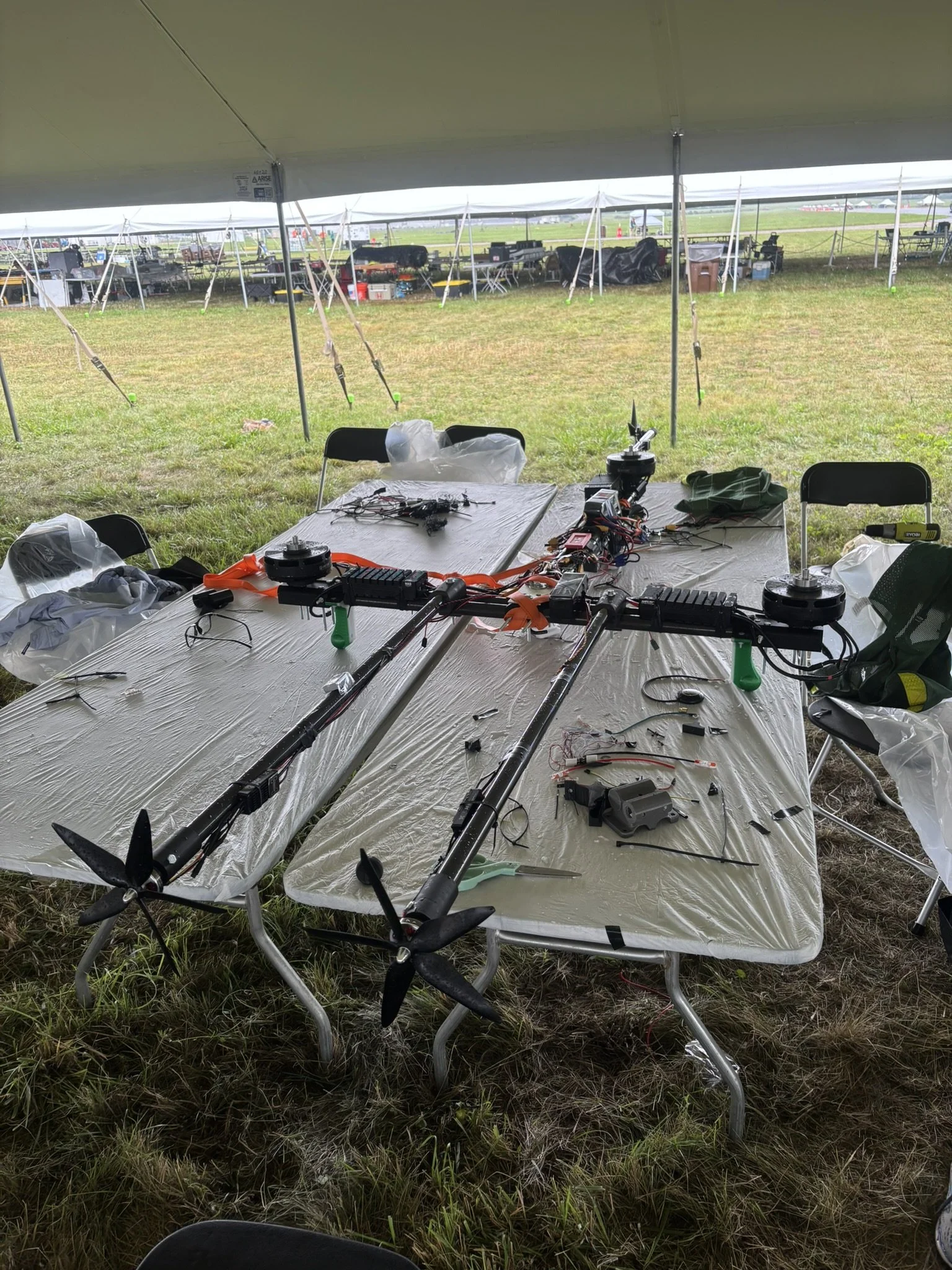
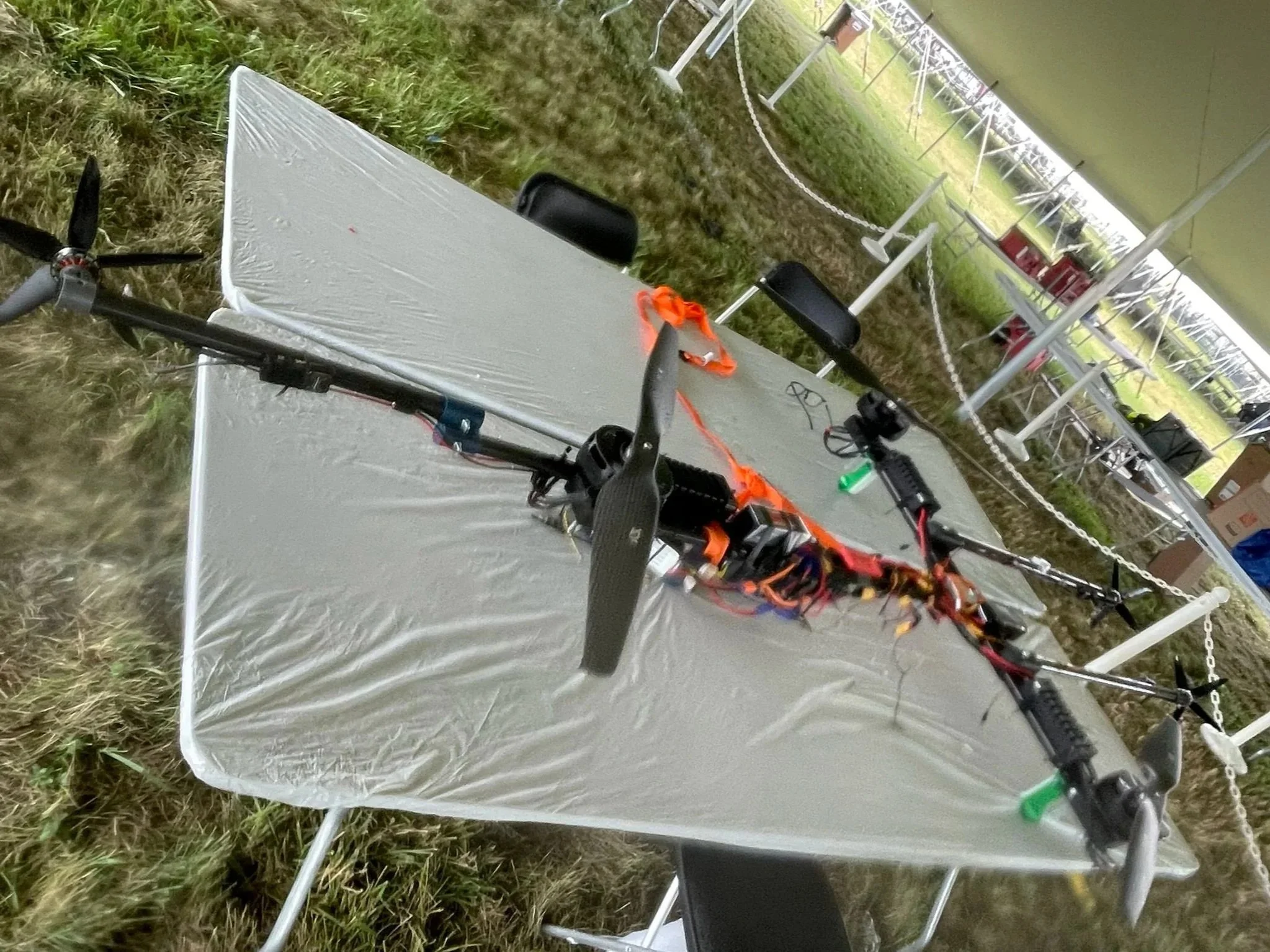
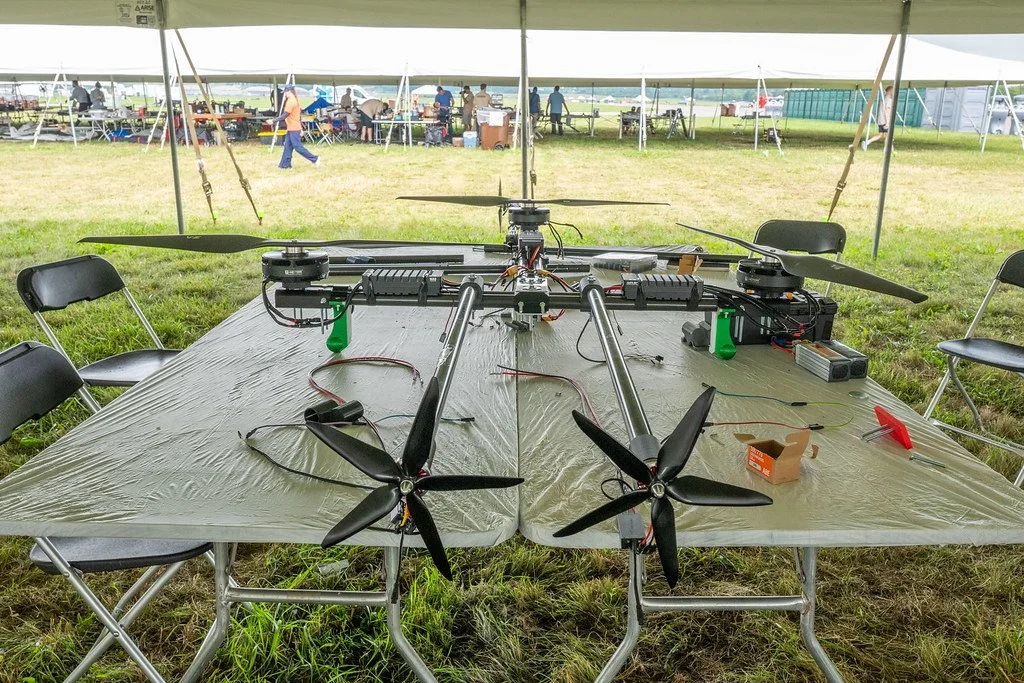
not so final results
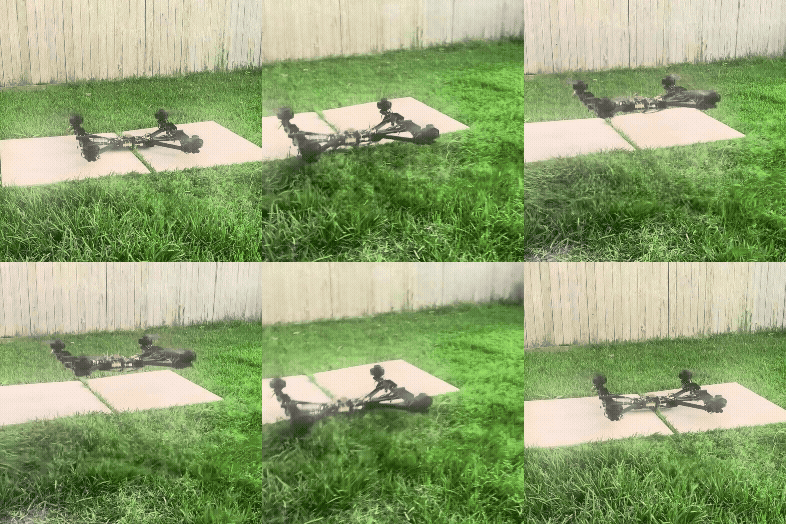
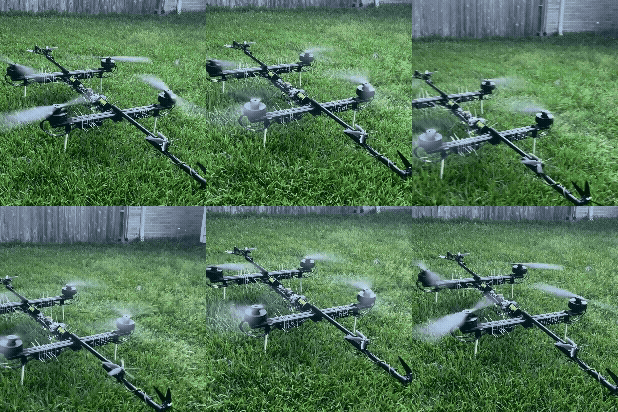
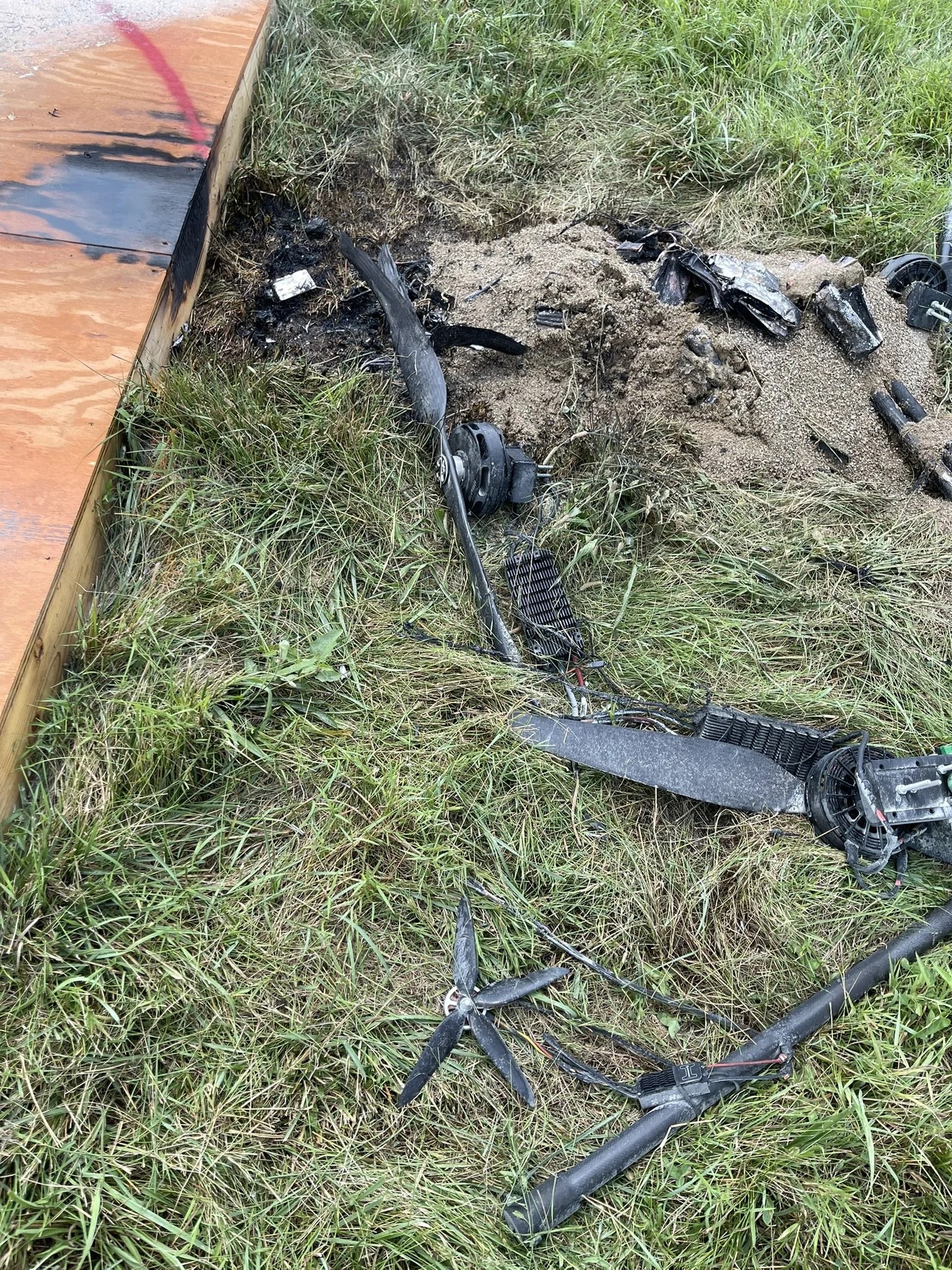
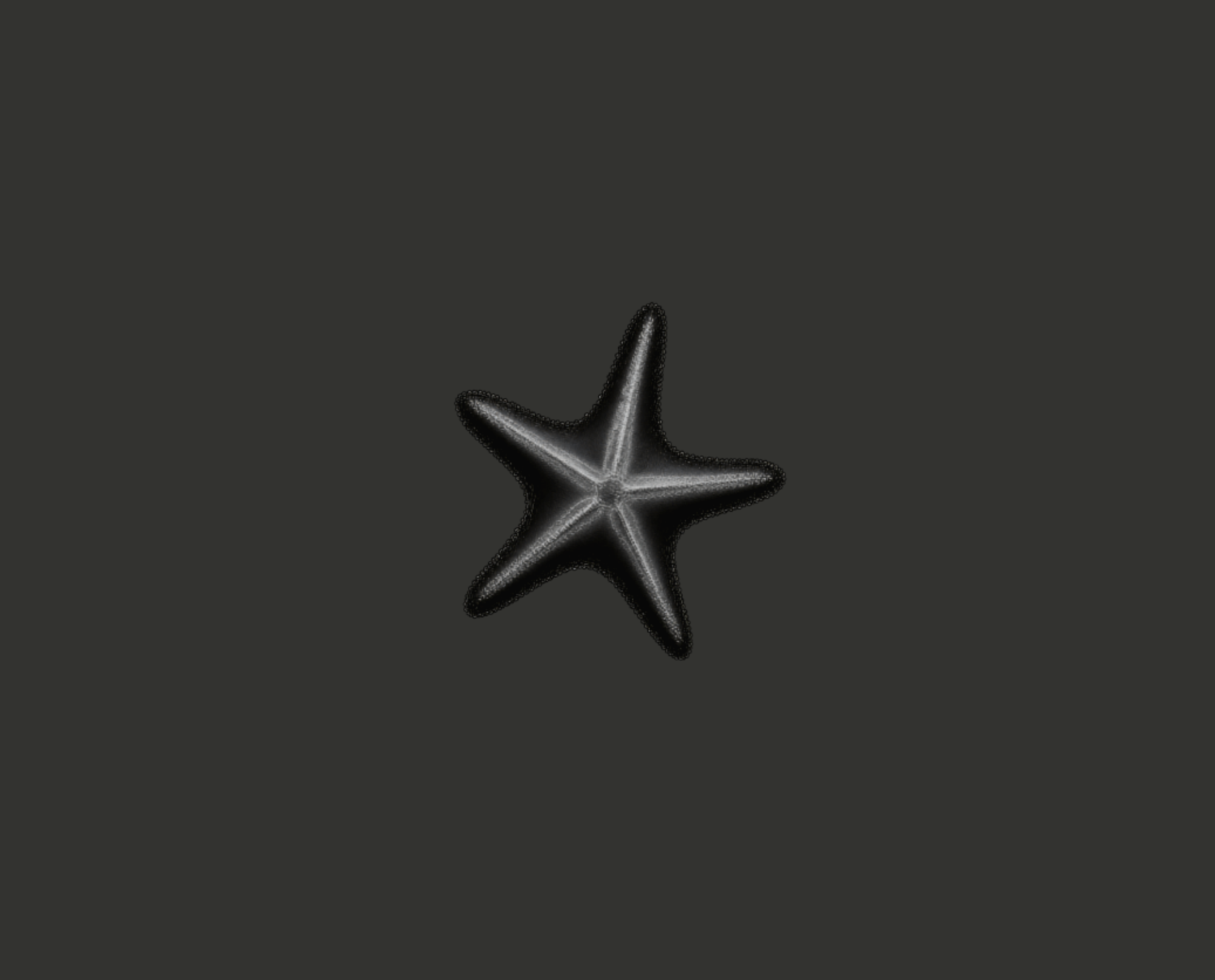
Ultimately, our craft crashed and burned directly on the launch pad. Despite the setback, we were determined to prove whether this accidental tricopter design configuration could actually succeed. After the competition, we built a scaled-down prototype to test and validate our concepts and thrust theories. This research directly laid the groundwork for our next-generation platform: ARGUS V2.
more projects
-
QUARTER MILE BALL
-

NON BACKDRIVABLE GEAR
-
argus v2 - uas
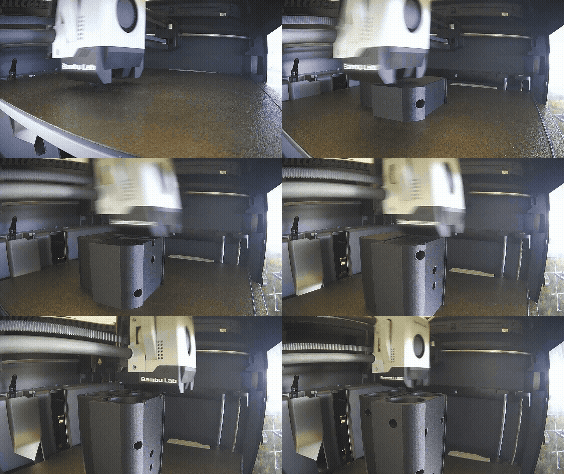
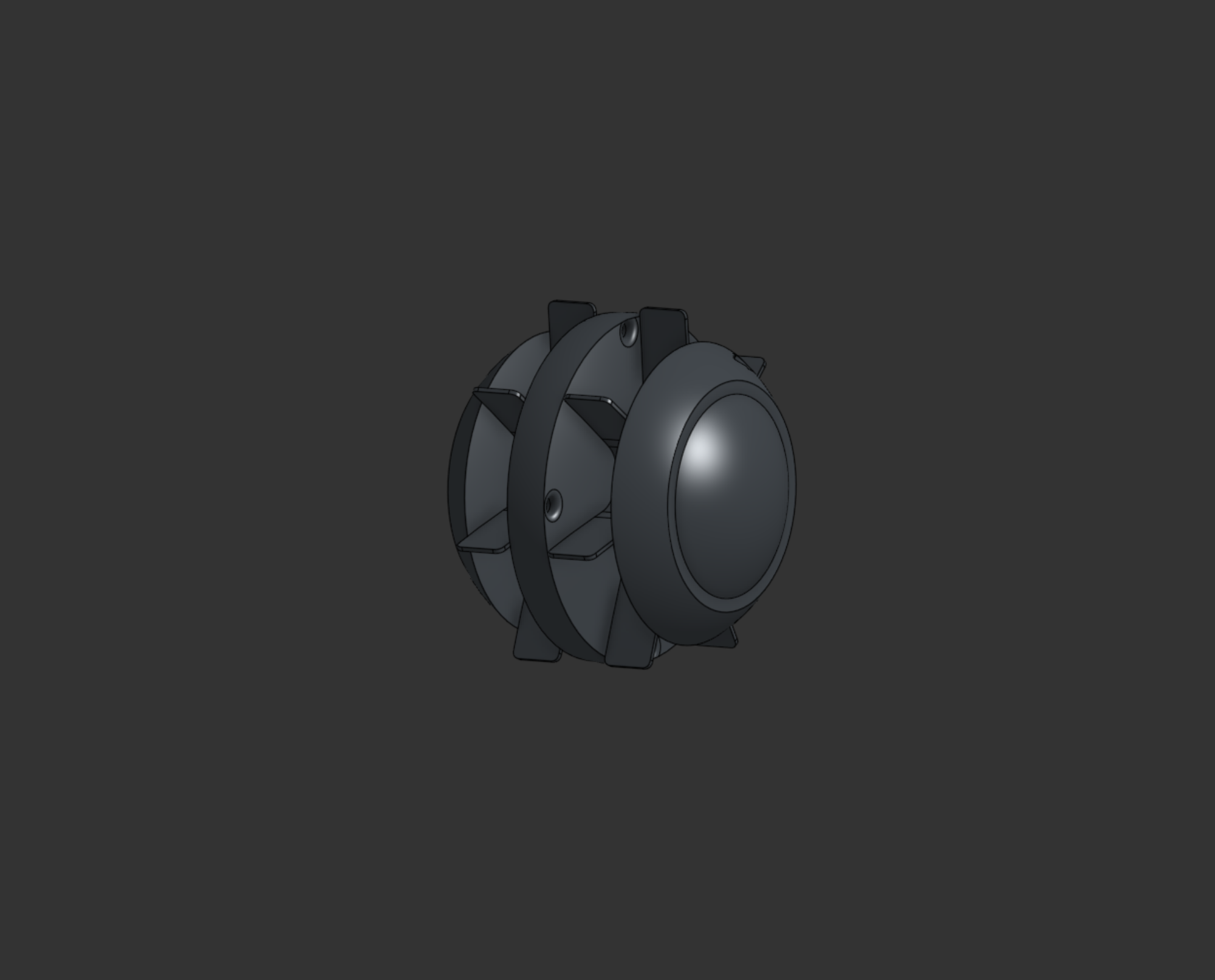
QUARTER MILE BALL
MATERIAL TYPE : Polycarbonate Carbon Fiber
FRAME TYPE : Split Sphere
POWER TRAIN : Electric system
WEIGHT : 92 Grams
FLIGHT DURATION : 45 Seconds Max
FLIGHT CONTROLLER : Custom flight algorithm
more content coming soon
more projects
-
HEAVY LIFT DRONE
-
NON BACKDRIVABLE GEAR
-
argus v2 - uas
NON BACKDRIVABLE GEAR
NON BACKDRIVABLE GEAR
MATERIAL TYPE : Nylon Carbon Fiber
MORE SPECS COMING SOON
more projects
-
QUARTER MILE BALL
-
HEAVY LIFT DRONE
-
argus v2 - uas